01
A problem worth solving
Students observe people around them, test assumptions and choose one need they can understand well.
For schools
A practical entrepreneurship programme for ages 13 to 18. Students use AI to find a real problem, shape an offer, build a website and put it in front of real people.
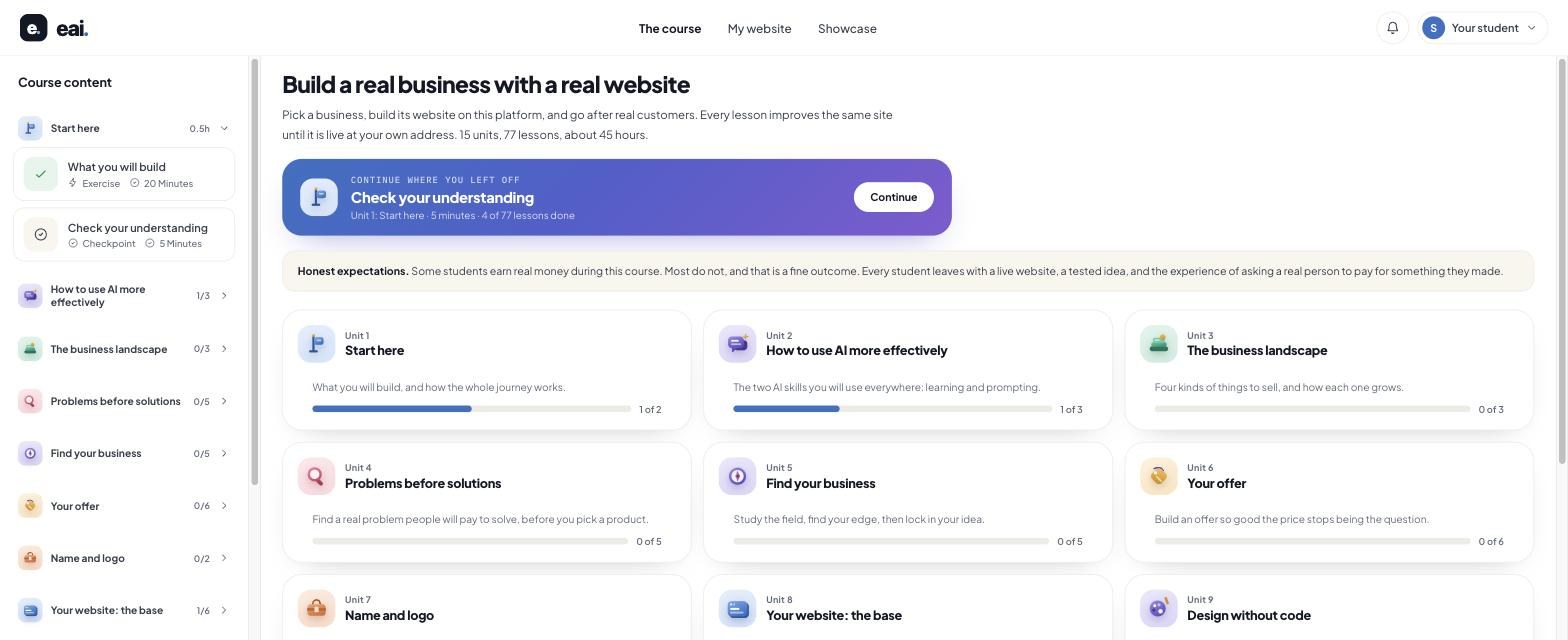
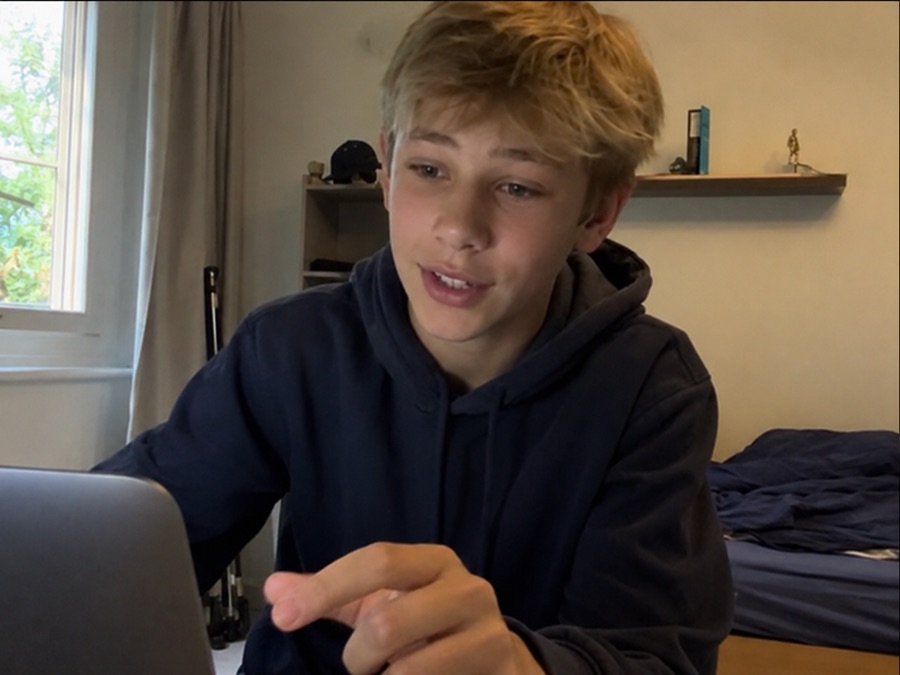
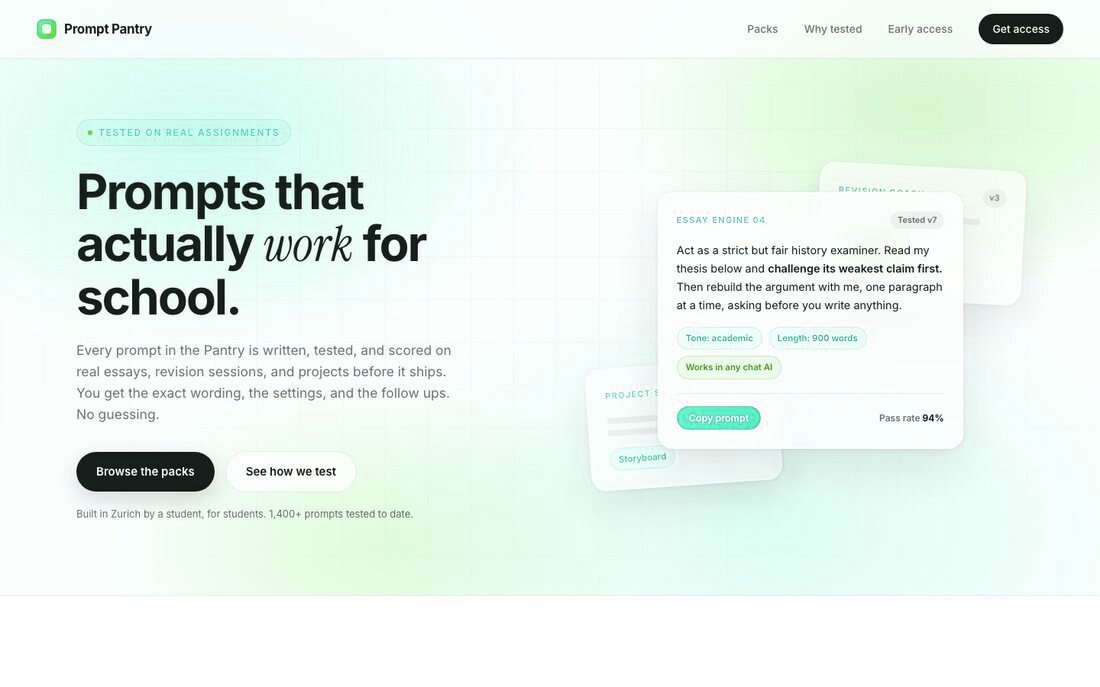
The student journey
This is not a set of AI demonstrations. Students make decisions, build on them and finish with something another person can understand and respond to.
Students observe people around them, test assumptions and choose one need they can understand well.

They turn the problem into a specific product or service for a clearly named customer.

Every lesson improves the same website until the business has a place of its own on the internet.

Students explain the offer, speak to potential customers and learn from the response.
Inside the platform
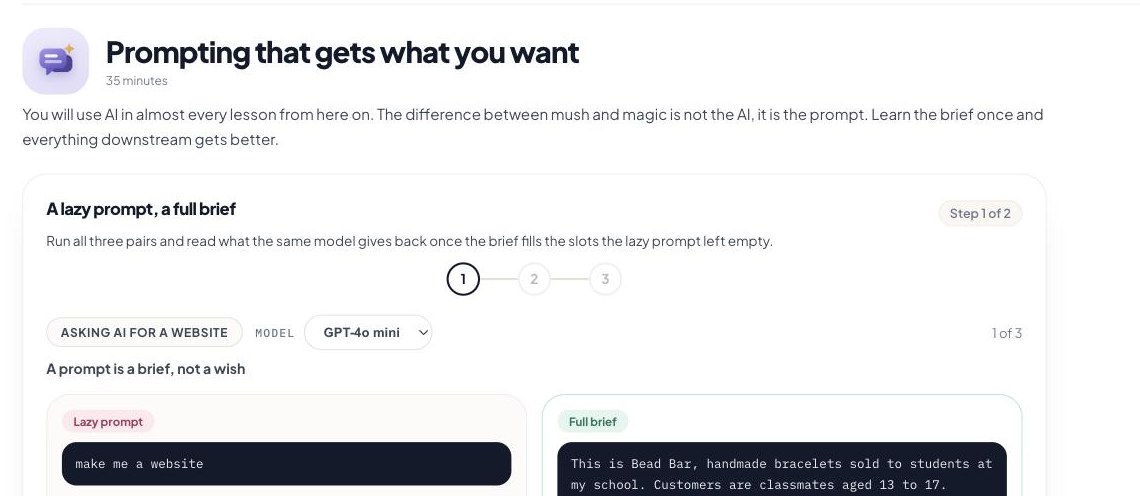
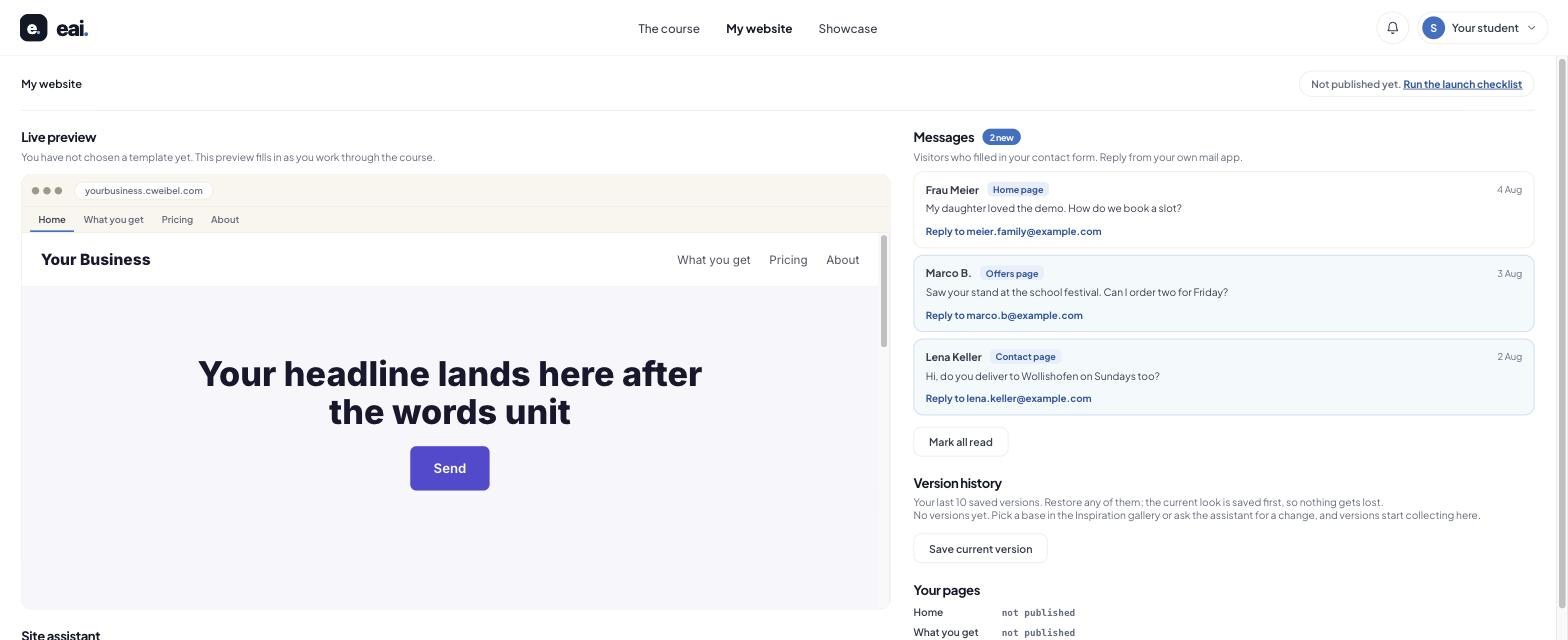
Lessons explain the concept, the AI Guide helps a student apply it to their business, and the work stage shows the result. Students see the current step and what comes next without being handed the whole roadmap at once.
Why it fits school
Approximately 30 hours of guided work moves from idea selection to a live website and a first sales attempt.
Students use AI for research, critique, writing and design. The goal is better judgement, not faster homework.
The work produces a business brief, offer, brand, website and launch plan that can be reviewed or showcased.
Each exercise adds to the same business. Students see how decisions accumulate instead of completing disconnected tasks.
Support around the student
The self-paced pathway uses an AI Guide. Human experts are mentors. The distinction stays clear for students, families and schools.

Students can record a daily Founder's Log by video or writing, with transcription and a concise summary.

Approved updates can be prepared for parents, but a person must review them before anything is queued or sent.

Where mentorship is included, students can receive notes, video feedback and calls from an expert in their field.
Ways to run it
We shape the timetable, level of facilitation and mentorship around the students and the school context.
In the timetable
Run the pathway across entrepreneurship, technology or interdisciplinary project periods, with a shared cohort rhythm.
Best for a class or year groupBeyond the timetable
Give motivated students a structured build they can complete in weekly sessions with work between meetings.
Best for clubs and enrichmentOne to one
Add an eight-week plan with weekly calls from a human mentor matched to the field the student wants to enter.
Best for selected studentsSchool partnerships
Tell us the student age, cohort size and the time you have. We will come back with a practical starting format and the questions we need to answer together.